Reading Time: 4 Minutes
Behind every dependable pneumatic braking system is a continuous supply of clean, dry compressed air. The air dryer protects that supply and the reliability of heavy commercial vehicles.
THE MOISTURE CHALLENGE
Compressed air operates the brake chambers, valves and other pneumatic equipment on a heavy-duty truck. But there is a catch. The air a compressor draws in always carries moisture. When that air is compressed, the moisture travels with it through the system, and as the hot air cools, the water vapour condenses into droplets.
Left to accumulate, that water causes trouble throughout the system. It promotes corrosion inside reservoirs, contaminates valves and damages sensitive components. In cold weather it can freeze in air lines and passages, restricting airflow and interfering with braking. Oil particles from the compressor make matters worse, mixing with water and other contaminants to form deposits that attack seals, valves and internal passages. Controlling these contaminants is essential to pneumatic reliability.
INSIDE THE AIR DRYER
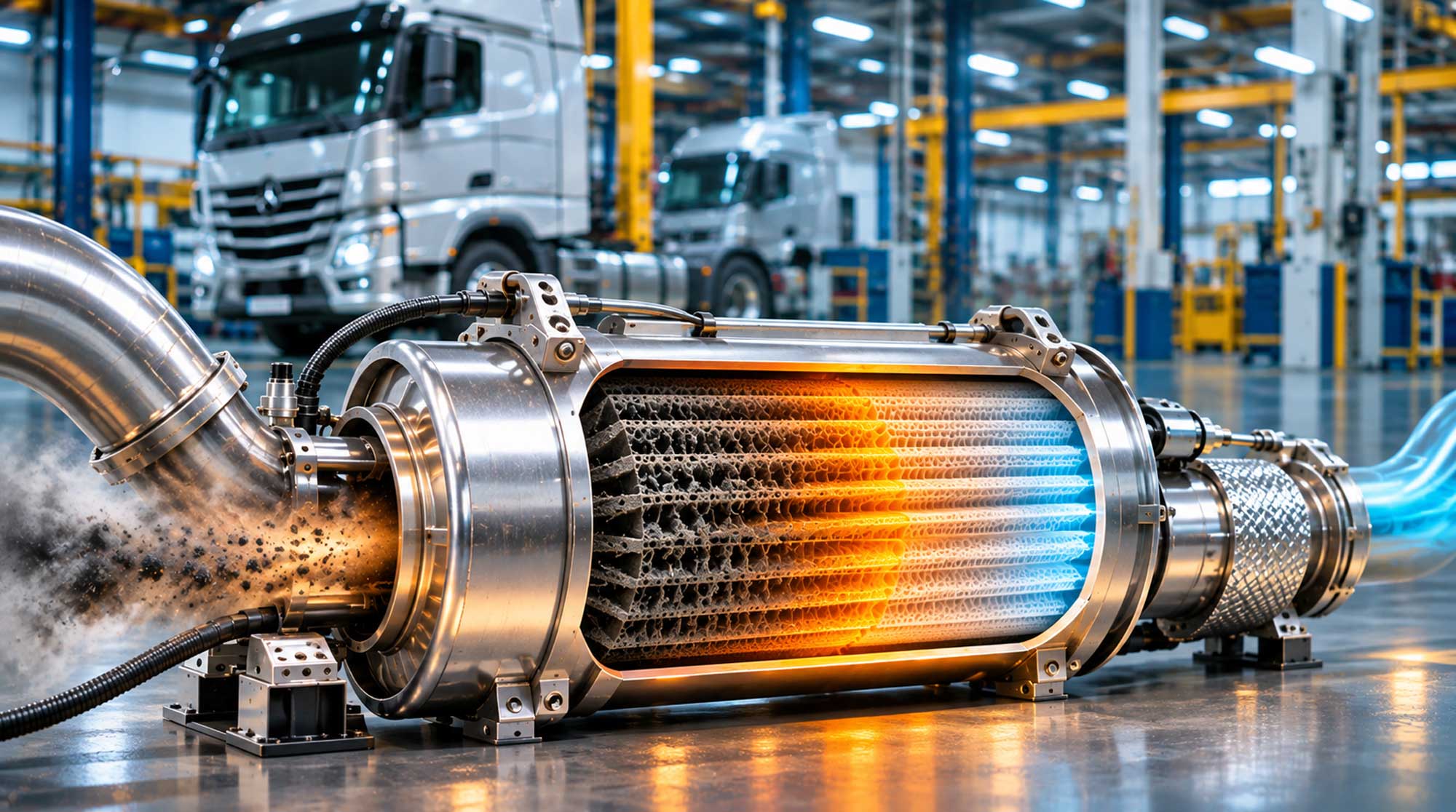
An air dryer sits in the compressed-air supply circuit, typically between the compressor and the air reservoirs, and removes moisture and contaminants before the air reaches the brakes. Most conventional heavy-vehicle dryers combine three stages.
Moisture separation: As air enters the dryer, its internal arrangement separates liquid moisture and contaminants from the airflow and directs them to the sump.
Filtration: The filter captures oil droplets and solid contaminants that would otherwise enter the downstream system.
Desiccant drying: A cartridge of moisture-attracting material removes water vapour by adsorption. Instead of soaking up water throughout its volume, as a sponge would, the desiccant holds water molecules on its surface. The air that leaves is considerably drier.
THE PURGE CYCLE: SELF-REGENERATING PROTECTION
A desiccant dryer renews its drying material during normal operation, through an automatic purge cycle coordinated with the vehicle’s air-pressure control.
Charging and drying: When the compressor supplies air, it passes through the dryer, which separates moisture and contaminants while the desiccant removes water vapour. The clean air then fills the reservoirs.
Purging and regeneration: When system pressure reaches the governor’s cut-out setting, typically around 125 psi (about 8.6 bar) in US systems, the compressor stops delivering and the dryer begins its purge. The purge valve opens, and stored air flows backwards through the desiccant bed and out through the exhaust, carrying accumulated moisture and contaminants with it. When pressure falls to the governor’s cut-in setting, the compressor resumes and the cycle starts again.
The automatic cycle lets the dryer provide continuous moisture control without replacing the desiccant after every operating cycle.
WHY THIS MATTERS
An air dryer is not an accessory. It is a protective component, and its effect shows up in maintenance bills and availability. Cleaner, drier air protects brake valves and chambers from moisture-related deterioration, limits corrosion in reservoirs and lines and reduces the risk of freezing. For fleets, that means fewer interventions, less downtime and more dependable pneumatic operation across demanding applications.
RECOGNISING AIR DRYER PROBLEMS
A dryer can lose effectiveness through desiccant deterioration, contamination, internal wear or purge-mechanism faults. Maintenance teams should watch for:
- Excessive water in the reservoirs despite regular drainage
- Oil contamination or abnormal deposits in the pneumatic system
- Persistent moisture-related problems in air lines and valves
- Abnormal operation or leakage around the purge valve
- Damaged electrical connections or a malfunctioning purge-valve heater, where fitted
Water in the reservoirs does not automatically mean the dryer has failed. Compressor condition, excessive air consumption, system leakage and operating conditions should also be investigated.
An air dryer also does not remove the need for regular reservoir drainage and pneumatic inspections, and service schedules and replacement intervals should follow the vehicle manufacturer’s specifications and the applicable dryer service requirements.
PRODUCT AT A GLANCE
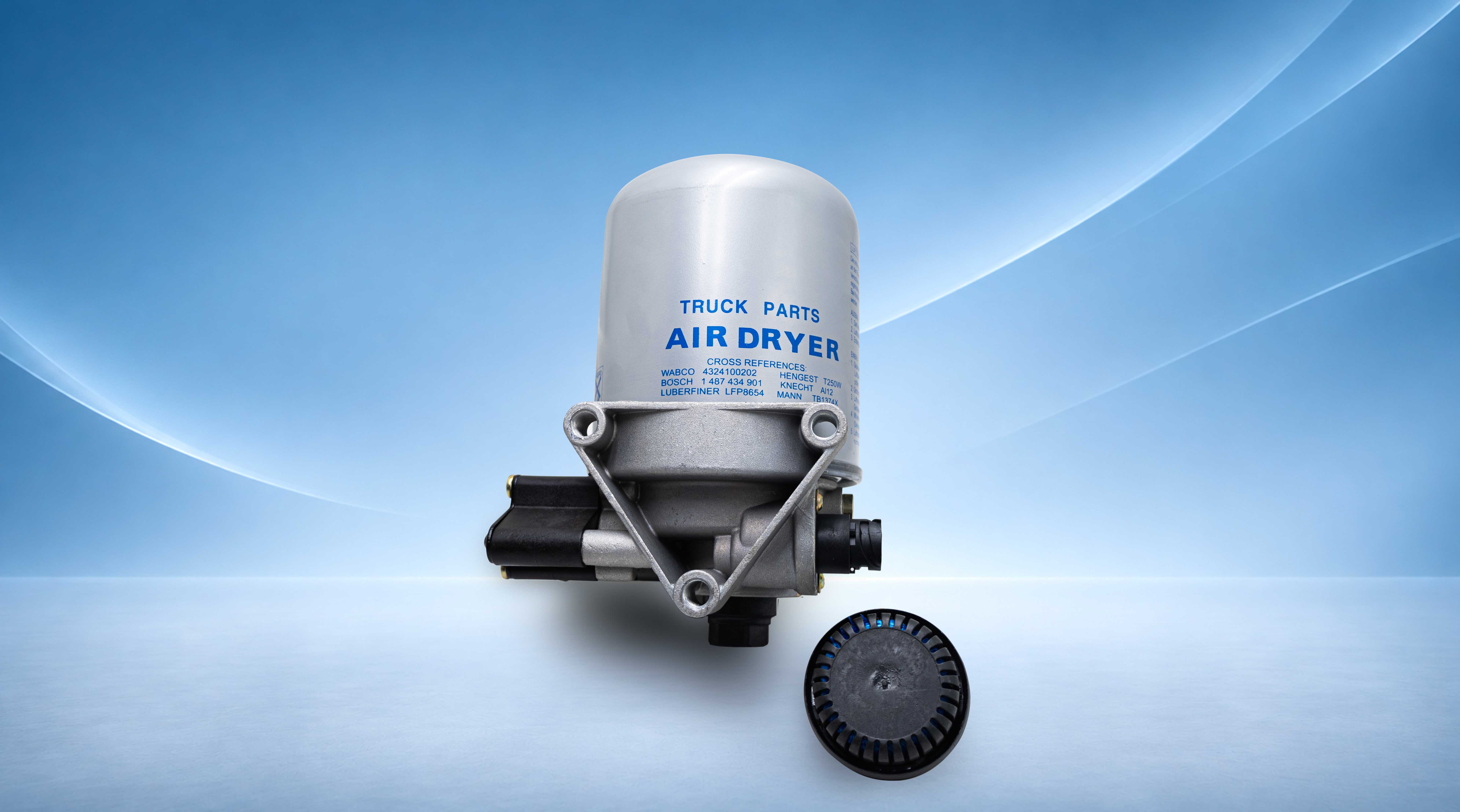
BRW Air Dryer
Dry air for every journey.
BRW part number: 20579
OEM reference: 20884103
Vehicle application: Volvo
How it works: a moisture-absorbing desiccant system with filtration removes moisture, oil particles and other contaminants before air reaches the reservoirs and braking components
Built for: demanding commercial vehicle applications, to limit moisture-related corrosion, reduce freezing risk and protect essential braking components
Before you order: verify BRW part number 20579 and OEM reference 20884103 against the specific Volvo model and configuration
emBRWace Perspective
A commercial vehicle’s braking reliability depends on more than its mechanical parts. The quality of the air that powers them matters just as much.
As heavy vehicles grow more sophisticated, clean, dry compressed air stays a fundamental requirement for dependable braking. The air dryer works largely unnoticed, yet its contribution to vehicle safety, component protection and fleet uptime is substantial.
emBRWace Explains
Air dryer
A device in the compressed-air circuit that removes moisture and contaminants before air reaches the reservoirs and brakes.
Desiccant
A moisture-attracting material that holds water vapour on its surface.
Adsorption
The process by which a desiccant attracts and holds water molecules on its surface, not throughout its volume.
Purge cycle
The automatic process in which stored air flows backwards through the desiccant to carry away moisture and renew it.
Governor (cut-out and cut-in)
The control that stops the compressor delivering air at the cut-out pressure and restarts it at the lower cut-in pressure.
Purge valve
The valve that opens during the purge cycle to release moisture and contaminants to the atmosphere.
Thought to Take Away
Dry air protects more than the braking system. It protects the reliability of every journey.